Image:
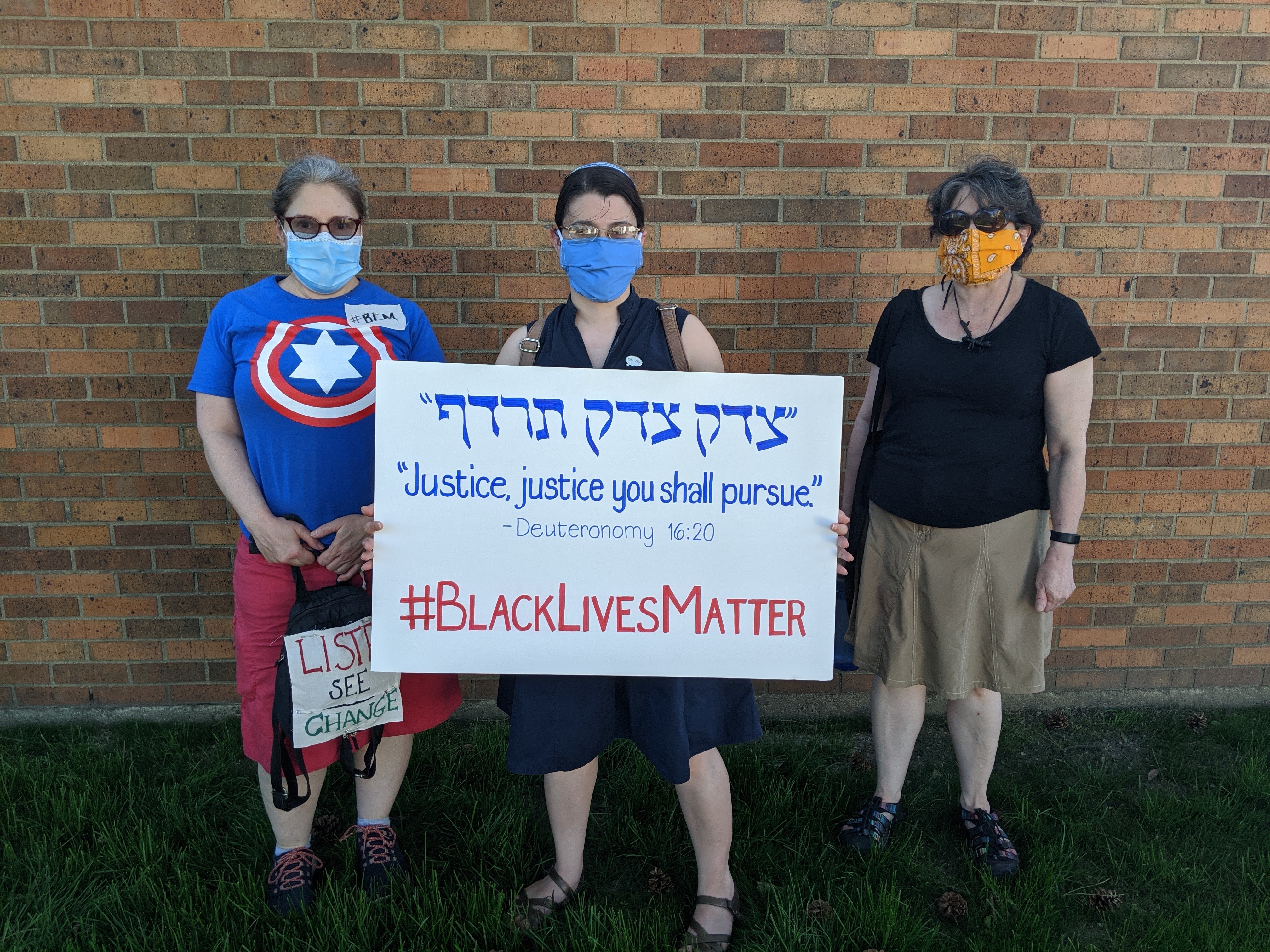
In the aftermath of George Floyd's murder in May 2020, many North American Jewish communities reflected on whiteness, structural racism, privilege, and systemic oppression. Now, following the atrocities of October 7, 2023 in Israel, and amidst ongoing death and destruction in Gaza, we face surging antisemitism - indeed, the highest rates of documented antisemitism in at least 46 years.
Many of the white Jewish people I know who protested in support of Black lives at the height of the pandemic or made bold posts on social media have largely gone silent. One reason may be the growing prevalence of antisemitic violence.
I fear that as our Jewish communities strive to deal with pervasive antisemitism and antisemitic violence - which undoubtedly must be addressed - we will retreat from antiracism, mistakenly believing these are two phenomena we must choose between. That's a false choice. These struggles are interconnected.
The antisemitism that threatens us is part of a larger ecosystem of white supremacy that seeks to marginalize not just Jews but queer people, people with disabilities, BIPOC (Black, Indigenous, and People of Color), and others. These same systems also seek to marginalize our intersectional Jewish communities. We must keep in mind that 10-24% of Jews identify as Jews of Color, members of the LGBTQ+ community, Jews with disabilities, and many other intersecting targeted identities.
To focus singularly on a single type of oppression is misguided. White supremacy is our collective enemy, and we must commit to dismantling it, because oppression of any of us is a threat to all of us.
As the recent Pew Research Center report found and as the Jews of Color Initiative's Counting Inconsistencies study states: "The United States will become a majority people of color. Our multiracial U.S. context, coupled with the fact that 71% of non-Orthodox Jews in the United States will likely marry non-Jews, tells us that the U.S.-based Jewish community is, and will become, increasingly multiracial."
For Jews of Color, it is impossible to focus only on antisemitism as racism continues to impact every aspect of life. Jewish communities must center Jews who experience intersectional marginalization and fight for safety on multiple fronts.
If we don't take an intersectional approach, we ask people who face multifaceted marginalization to set aside one or more of their core identities. We convey that the Jewish community is not a place for them.
An intersectional approach that addresses the systemic nature of white supremacy will improve the lives of Jews of Color, single Jews, interfaith families, Jews from working class backgrounds, Jews with disabilities, and many more.
As uncomfortable as it is to admit, white Jews benefit from the same racist system that oppresses BIPOC communities.
In our society, the way people are seen and coded dictates our safety. Racism relentlessly plagues Black and Brown communities at every minute, preventing many BIPOC individuals from living safely and sometimes at all.
Amidst generations of negative stereotypes, Black men are often seen as predatory threats. While white Jews, particularly those who present in more traditionally observant ways, are undoubtedly vulnerable, they are not societally coded as physically dangerous.
White Jews have largely overcome the historic structures and systems that hindered equal access to basic needs and rights like healthcare, affordable housing, and education. Our whiteness protects us from many forms of structural oppression, like the school to prison pipeline or police brutality. In fact, while we wish we didn't need protection at our synagogues, white Jews often take comfort in the presence of traditional law enforcement.
Have white Jews done all we can to protect young men of Color from police violence? The high rates of police killings of Black men tell us no. Have we benefited from generational advancement through the same systems that have harmed and dehumanized BIPOC families for generations? History tells us yes.
It is heartbreaking when a trusted friend, partner, or colleague does not take a clear, firm stand against antisemitism. But are Jews sometimes too quick to denounce those who do not fulfill our expectations of how to address antisemitism?
Ilana Kaufman discusses the glaring lack of racial diversity in Jewish leadership roles in her ever-relevant piece "Despite 10 Years of Promises, Jewish Leaders Have Failed to Make Space for Jews of Color." And Rabbi Sandra Lawson writes, "I can't think of one Jew of Color who has not had a racist experience in the Jewish community."
Nonetheless, many Jews of Color haven't given up on white-dominated Jewish communities, despite the racism they have faced inside them.
While white-dominated Jewish communities sometimes become exasperated with coalition partners for not taking a stand on antisemitism when and how we want, we can't expect others to do what we have not. Just as we ask our partner organizations and those with intersecting identities to be patient as we slowly address racism, transphobia, ableism, and other forms of oppression, so too must we be patient - and unyielding - with our valued partners.
While we must never tolerate antisemitism, white supremacy relies on us giving up on our partners. It seeks to tear coalitions apart by pitting those with marginalized identities against one another. We cannot let that happen.
In Yours in Struggle: Three Feminist Perspectives on Anti-Semitism and Racism, Barbara Smith says that white Jews who left Europe to escape genocide, pogroms, and violence were able to find "a society by no means free from anti-Semitism, but one where it was possible in most cases to breathe again." The irony of George Floyd's plea, "I can't breathe," cannot be lost. That plea is ongoing for many Black and Brown people.
The Jewish people have long been called "the God wrestlers." We must not lose our stamina now. As we wrestle with how to keep our communities safe from antisemitic violence, how to instill Jewish pride in our children when the world tries to do the opposite, how to seek joy in our Jewishness, let us also keep wrestling against white supremacy and racism. Our future depends on it.
About the Author
Search
Related Posts
Image:
Creating A Workplace of Belonging
Here are a few pieces of Jewish wisdom that make excellent guiding principles, for those of us with disabilities and allies, to create a workplace of belonging for everyone.
Image:

How We Can - and Must - Honor Neurodivergent Jews
“And God created humankind in the Divine image” ( Genesis 1:27). For neurodivergent Jews like me, this verse – and this truth – holds special power. Our ways of thinking and being don’t require fixing; rather, they’re part of God’s infinite design. The ways in which neurodivergent people process the
Image:
Reflecting on our Jewish Identities, Safety, and Belonging
As a Jew, do you feel welcomed and safe to express your authentic self in all aspects of your life? As an educator, I've championed identity safe classrooms, based on research that indicates when students’ identities are affirmed, they perform better in school.